


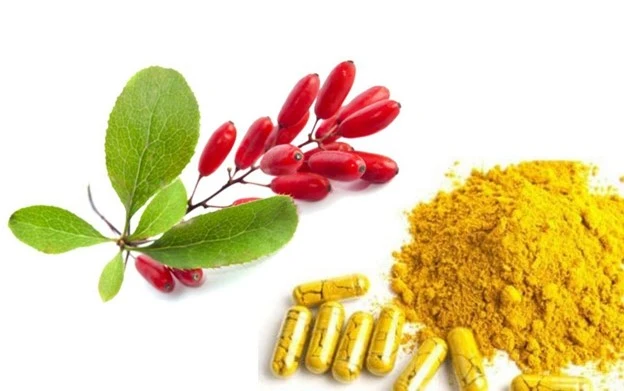
The supplement industry is full of big promises. Very few products are backed by strong scientific research. Every year, a new “miracle” supplements appear (so people can sell things). Only to disappear when the evidence doesn’t hold up.
So far, berberine is challenging that record. Berberine is already known (but not widely used) for supporting healthy blood sugar and metabolism. But new research suggests it helps reduce the risk of colorectal polyps returning after they have been removed. These findings are very exciting because colorectal polyps are one of the biggest risk factors for developing colon cancer later in life. And the scientific certainty is very high.
What Is Berberine?
Berberine is a natural plant compound found in several medicinal plants, including barberry, Oregon grape, and goldenseal. It has been used for centuries in traditional Chinese and Ayurvedic medicine.
Many people mistake berberine for turmeric because both are bright yellow plant compounds. (Both will stain your fingers!) However, they are completely different substances. Turmeric contains curcumin, berberine belongs to a separate class of natural alkaloid compounds.
Most importantly: berberine has much stronger clinical evidence for several health benefits, particularly blood sugar regulation and, more recently, colorectal health.
The Study That Grabbed Doctors’ Attentions
A very large randomized, double-blind, placebo-controlled clinical trial published in The Lancet first found that people taking berberine after the removal of colorectal adenomas (pre-cancerous polyps) had a significantly lower chance of the polyps returning than those taking a placebo. Researchers reported a recurrence rate of 36% in the berberine group compared with 47% in the placebo group. This difference is extremely high and has a very statistically significant difference (p = 0.001). What does that mean?
The results are (almost certainly) very real. Scientists didn’t imagine the effects or make a mistake.
Researchers then followed many of these participants for six years after treatment ended. The protective effect remained impressive. Adenoma recurrence occurred in 34.7% of people who had previously taken berberine, compared with 52.1% of those who had received placebo.
Overall colorectal colyps and growth occurrence was also lower (63.4% vs. 71.0%). These findings suggest berberine may provide long-lasting protection against the recurrence of pre-cancerous colorectal growths after polyp removal.
However, it’s important to note that the studies focused on preventing adenoma recurrence, not preventing colorectal cancer itself. However, it is generally believed that reducing polyp formation and growth from beginning is an important strategy for lowering future cancer risk.
A Powerful Antioxidant
Berberine is also recognized for its powerful antioxidant and anti-inflammatory properties. It helps reduce oxidative stress, supports healthy cellular function, and may influence several biological pathways involved in inflammation and abnormal cell growth.
Although berberine is considered a strong antioxidant, it is generally not thought to be as potent as ultra-powerful astaxanthin, berberine is of the most powerful antioxidants currently being studied. Right now, laboratory research provides strong evidence that berberine has greater antioxidant activity than vitamin C. (This does not mean that Vitamin C is not important. Berberine is different and stronger per molecule.) Berberine may provide broader biological effects than turmeric because it influences multiple cellular signaling pathways.
Bottom line: The study did not try to prove that berberine can prevent colon cancer (they were studying cancer patients, not cancer prevention). And no supplement should replace recommended colorectal cancer screening or medical care. It should also not be confused with other supplements like astanxthin, vitamin C, or gotu kola.
However, clinical studies suggest it may reduce the recurrence of pre-cancerous colorectal adenomas after they have been removed. For people with a risk or genetic risk of colon cancer, adding berberine to your daily supplement stack may be a wise move. However, additonal research will be needed to verify this expected outcome.